Friday, 29 March 2013


Event Management Powered by Cloud Solutions


Say you run out of coffee or there is a problem with the Wi-FI in one break out room and you need to contact the hotel staff quickly; BlazeLoop will soon become a second nature for you, a meeting planner always in the urgency.

Cloud computing technology
Cloud is what everyone talks about. But do we really know what it is? To make it simple, it is a bunch of servers that makes your data live so it can never be lost or deleted. Cloud storage enables the users to share easily and in real time data and files while being on the road or at events, and have a quick access directly on their mobile device. It also offers a total control, as well as flexibility, on a single platform, and eliminates therefore the needs for hardware or software.


BlazeLoop, a Mobile Event Engagement solution
It is on  February 25, 2013, that the leader in mobile customer engagement solution Benbria - specialized in retail, hospitality, financial and fast casual restaurant customers - has launched BlazeLoop, its latest mobile application aimed at helping meeting planners. With this cloud based messaging solution, event planners can get in touch quickly with the appropriate hotel staff and notify them about last minutes changes. Finished the time when planners had to leave a meeting to run through the hotel to find staff or call the hotel house phone or cellphones to leave messages that might not arrive on time. Now it is possible for them to communicate in real time, without disrupting their event; meanwhile, the hotel staff has now an appropriate way, “discrete and unobtrusive”, to communicate with their client. By using their own mobile device, planner can use a simple Web-based interface to transfer their requests and be connected in real time with employees for action, response and closure, resulting in a smoother coordination.


To go further
Cloud computing solutions are a real step ahead while talking about technology and represent a real progress for the event industry. Indeed, it considerably helps the meeting planner in the management of its events as this is an efficient and convenient tool, with lower costs, is time saving and is totally mobile, as well as to be easy to use. Moreover, we think that it definitely contributes to enhancing the client’s and the attendees’ experience. With an efficient management of last minute requests, events can be managed in a smoother way. In addition of “offering a faster, more accurate and personalized service” - Andrea Baptiste, CEO, Corporations - and therefore improving staff productivity while contributing to client’s experience, we strongly think that this type of technology can benefits to the hotel by increasing event revenue. With a quicker turnaround on customer service requests, the hotel is indeed able to propose and sell more “extras” during its client’s event and in the same time, can easily track and bill any additional services that, in a rush, can easily get lost when not included in the original contract.
However, while the technology can prove to be a great asset for a company, it could also cause harm if not understood and used properly. With cloud computing services, the main danger that can be highlighted is that all data are stored on a platform online, and therefore security and confidentiality issues might occur if not well protected. Indeed, data are essential for any business and must be well secured. Furthermore, an internet connection is required to have access to cloud computing services, and any problem with this one can keep you from accessing/downloading/uploading files. It is essential to determine the business impacts and IT advantages the company wants to achieve, and understand how a cloud provider can help to manage potential security risks, before configuring the cloud environment according to the business context


    Written by Iuliia Nadtochii and Audrey Moreno

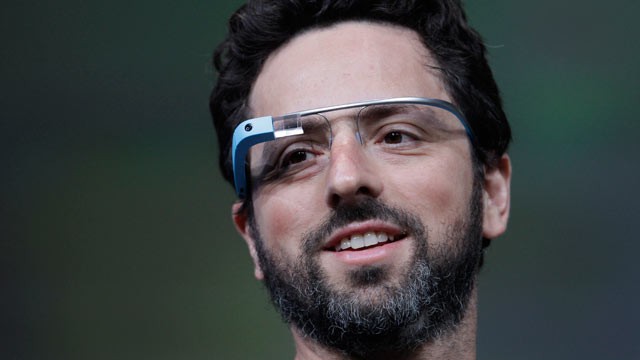
Google Glass – the Next Big Thing in the travel industry?

We could think that we are watching a sci-fi movie by looking at the video released by Google this last February regarding its new high-tech product: Glass. These interactive glasses gather in one device all the digital applications you could use when traveling. Indeed, through Glass you will be able to visualize maps and to ask Glass for your next direction via a GPS. Besides, Glass provides an augmented reality -powered search. Thus, when visiting, for instance the Eiffel Tower, you can ask Glass information regarding this monument. You will also be able to take pictures of what you have in front of you in the blink of an eye. If you need flight information, Glass can provide instant updates such as delays, directions to gates or the time you need to reach it. From the video posted by Google we can also observe that different communication tools are available such as text messaging or videoconferencing.

In order to get more ideas regarding applications that could be developed for Glass, Google launched the “Explorer Program” last month that offered 8, 000 fans the chance to pay 1500 dollars to have the privilege of testing the Glass which date release has not been announced yet.

As Karthick Prabu explains in his article, Tourism & Travel companies will also have to start thinking about the future applications of Glass in their industry as the product may be quickly adopted by consumers. Thus, for the hospitality sector, it could be used in hotel rooms as it is the case for Ipad today. It could also replace the current audio guides when exploring a museum or a city. Last but not least, this device could also be provided in airplanes as an entertainment system.

Many other possible applications can be thought for the future: hotel search through Google Maps, flight search, real-time discounts in hotels, museums, restaurants, etc. when walking in the street, or integrating Google Now that has the capacity to provide “the nearest photo spot and nearby attractions to a place”.

All in all, Glass has a great potential of use for the travel industry but it may be too soon to realize what will be the real impact of such a device. At a time where mobile is just at its premises, tourism consumers may not be ready to switch from a digital tool to another. Indeed, Glass will face different challenges when launching its commercialization. First of all, we could wonder if customers will see the advantages of using this type of device when they can use their smartphones. Thus, considering that the price of such glasses is quite expensive, consumers need to perceive the added value compared to existing products. Another factor that could be an obstacle to mass consumption is simply the design of the Glass. In fact, many consumers could be reluctant to buy this device as it needs to be worn on faces and have a “funny aspect”.


Key words: travel, tourism, new technology, Google

More information can be found at:
 
Contributed by Estelle Bidon and Audrey Tatard

Incorporate New Emerging Technologies Into Events: FOGSCREEN


Incorporate New Emerging Technologies Into Events: FOGSCREEN


"The imagined possibilities for fogscreen technology, an emerging new technology, include the projection of corporate logos, messages and other images. Event and meeting planners should know about future technologies and how/when to use them in various programs.
As part of the MPI WEC 2008 opening reception sponsored by Meetings by Harrah's at Caesar's Palace, Las Vegas, attendees walked through a fogscreen of the MPI logo as they entered the opening cocktail reception. Caesar's Palace's objective was to showcase how they can change the environment of a static room, explained Reina Herschdorfer, executive director of catering/conventions and events for Caesar's Palace.
Fogscreen technology is an emerging technology that is dry, so attendees and guest will not walk through the fog and get wet" (http://eventplanning.about.com/od/eventcareers/ig/MPI-WEC/Fogscreen.htm).

Fogscreen is a really innovative tool in the event industry that produces a thin curtain of dry fog that serves as a translucent projection screen, displaying images that float in the air. It is a new way to decoration, attract, advertise and entertain people. It has the advantage to change a simple room into a new technology venue and create surprise for the attendees. Surprisingly, there is not water into this tool, it is completely dry and people will be able to touch and walk through it without any problems. We can see that MPI already used this new technology for various events and it has been a real success.  To conclude, we think that this innovation has a really future in professional event as well as in private events. 


Regarding the product, we can find different types of fogscreen, adaptable, robust and with various designs that can fit every size of room.
Using Fogscreen provides unforgettable sensory experiences, create reveal effect, intrigues the audience and increase frequency of visits.
About the communication, thank to the fogscreen you can provide effective brand messages to create a high impact and influence customers. This is also one of the best way to differentiate yourself from your competitors and increase the ROI.


FogScreen - Beyong Tomorrow YouTube

http://www.youtube.com/watch?v=46IzFJW1Svg


No more fix screen is a revolution in the private sector but also in multinational entertainment corporations.

NeverTooLateToBeNewBrand

source:
http://www.fogscreen.com/
http://eventplanning.about.com/od/eventcareers/ig/MPI-WEC/Fogscreen.htm

Facebook Strengthens Link With Commerce Through "Buy Tickets" Button


   In the past, event organizers and companies solely used social media to drive attendance and revenue through the sharing button. Being present on various social platforms has become a way to build brand presence and become a part of consumers’  lives.  Even though the correct method for calculating ROI from social media efforts is debatable, measuring “shares” and “likes” seems to be an effective way to determine whether a company is developing the right kind of social media presence or not.  The following are the data collected by Eventbrite regarding the impact of social media:

--A post-purchase share on Facebook drives 20 percent more ticket sales per share than a pre-purchase one.
--Sharing activity on Facebook equaled almost 4 times the amount of sharing on Twitter.
---A Facebook ‘Like’ (the closest comparison to a tweet) drives on average $1.34 in ticket sales, compared with a tweet that drives on average $.80.

    These numbers certainly show the value of social media. By realizing this trend and seeing a 185% increase in tickets purchased through Facebook this year, a new revolution has occurred with Facebook that helps event organisers sell tickets to their events through a new ticketing link option to their event creation window.  An article by Adam Parry for Event Industry News describes the expected success of Facebook ticketing.  As of February, Ticketscript saw 10% of their sales taking place through Facebook ticketing. CEO of the company, Fred Jonker, said they expect to see this percentage grow rapidly in the year to come.  The appeal of integrating this kind of ticketing into social media activities for event planners is obvious.


This ticket buying option allows the company or organizer to cut out the middleman and make purchasing tickets more convenient for the customer.  The newest edition to the ticket purchasing element, the “Buy Tickets” button, is a replacement for the simple link to the purchasing web page.  The purpose remains the same, but the special button calls more attention to the purchasing option.  It also provides the opportunity to avoid leaving Facebook and opening another page to make the purchase.  The philosophy is simple: make the ticket buying process easier and more appealing to sell more tickets.  Extra steps between the call to action and the actual purchasing page may discourage purchasing.  This is probably one of the main reasons Facebook ticketing is expected to be a success.


Organizers will be able to reach a larger audience, which will boost profits for both parties since Facebook takes a percentage of ticket sales.  This platform change may also lead to viral events, which could make Facebook ads more worthwhile for companies and organizations.  Users may even click through ads and arrive at the ticket purchasing platform.  This would be a positive change, considering the negative feedback the company has received recently regarding the effectiveness of Facebook ads.
It is easy to use as well. First, event organizers go to their Facebook ticketshop and copy the web page link. Then, they create their Facebook event from their Facebook fan page as usual by clicking on “Events” in the side panel of their timeline and selecting “Create Event”. Here, the requested information is added and ticketshop link is pasted to the “Tickets” box. The last step is to click “Create” to save the event.
Eventbrite is one of the first ticketing companies to implement this new feature.  They justify their decision by explaining that they place an importance on making it easy for organizers who use their services to promote their events.  They also hope that their tie with the “Buy Tickets” button on Facebook will increase their reach for their own brand since the “Buy Tickets” button leads to a page on the ticketing service platform.  They hope more Facebook users will become aware of Eventbrite.  Perhaps, there may even be a partnership between Facebook and Eventbrite (or another ticketing service) in the future.
Article:
Parry, A. (2013, February 14). Facebook introduces direct buy ticket button for event pages. Retrieved from http://www.eventindustrynews.co.uk/2013/02/14/facebook-introduces-direct-buy-tickets-button-for-event-pages/

Other Sources:


Contributed by Yumeng Xie and Ludell Maggard


Thursday, 28 March 2013

Monument Tracker: A new way to discover cities ?


Tourism industry, as every others sectors, has developed the past few years lot of different applications in order to answer to the customers’ needs. In fact, since the progress of smartphones technology, applications have become inescapable.Many applications allowed to book a flight, a trip or to get information about a destination. Monuments Tracker is one of the many interactive travel guides, which propose to discover cities. However Monument Tracker offers amazing additional tools: geolocation and augmented reality. The application was created in 2010 by an actor of the tourism industry in Cannes, Jean-Jacques Lottermoser. 


How it works?


Monument Tracker is a unique tool which highlights the heritage and the history of various cities. The application is available in more than 38 cities in France and abroad. It is very easy to use as it is exploiting geolocation and push functions. It enables the user to visit the city in his own way and to be informed about the monuments, which surround him. Once the monument is detected, the application provides automatically series of information. As 60% of downloads are international, the application is available in 9 different languages on Apple and Android. As many others apps, Monument track is charged between 1,79 and 4,49 euros depending on cities.
Monument Tracker proposes also others features. First of all, augmented reality, among others functions, allows the reconstitution of sites. The application offers also thematic tours and search of monuments by names. Finally, monument tracker plans to store contents in advanced for foreign people and to only use the free GPS function when on site.
In order to collect data for the application, developers work closely with cities. A partnership is created between Monument Tracker and municipalities. Cities received 15% of the turnover of the application and are able to update the information thanks to a back office. 


Impact on travel industry 


Monument Tracker is an application which changes the way to discover and to learn about a city. In fact lot of tourists, when visiting often miss the opportunity to discover monuments that surround them.  
Monument Tracker allows tourists to discover a city they often explore partially. It allows traveling more lightly as the tourist gather all information needed in only one device.
As it is well-known, cities and governments struggle to collect funds for the renovation of their “heritage”, especially in France. Monument Tracker tries to assist the cities and monuments to gather money. To make tourists aware of the deterioration of historic monuments, Monument Tracker proposes to collect small donations thanks to their application. In fact, on each download, a small part is donated to a monument. For instance for a application of 1,79 euros, 1 euros is donated to the renovation of the Mont Saint Michel. Moreover for downloading the Paris apps, the buyer will automatically donate 2 euros out of 4,49 euros to the Pantheon.  Donations are efficient as in only few years, Monument tracker gathered 30 000 euros for the renovation of the Pantheon.
To conclude Monument Tracker is a useful and very successful application, which only not thinks about profits but also includes what matters the most to their founders, the heritage.

Alyssa, Coralie Deguerville & Lou

Liens:

Digital Tourism: Challenges of augmented reality


Invisible, attentive and adaptive technologies that provide tourists with relevant services and information anytime and anywhere may no longer be a vision from the future. The new display paradigm, stemming from the synergy of new mobile devices, context-awareness and AR, has the potential to enhance tourists’ experiences and make them exceptional.

Augmented reality today requires a tablet or smartphone. Tomorrow, it would be via Google Glass. At the same time when the Google Glass shows up, augmented reality is back in the news. This is one of the topics discussed at the Digital Tourism Forum.

The Biplane Company prepares an application that will revive the Allied landings on the French coast. "We can see the Canadiens in the water, in 3D, off the Arromanches," said Lionel Guillaume, Chief of Innovation at Biplane video agency at the end of a workshop on augmented reality organized under the Digital Forum in Deauville (25 and 26 March).

Ad hoc content
Augmented reality allows a mobile or tablet user to relive a period of history on site with a historical characters or a virtual guide, but also to show a monument in its age of glory. It is now possible to discover, as a view of the mind, the Berlin Wall or the Colosseum intact, by superimposing images. The Abbey of Cluny was implemented: the visitor guides the screen to the monument, and can observe resituated vestiges. It is a way to revive the heritage.
Regarding pageants, it is often necessary to use archival documents and to supplement them by research. "Augmented reality will become very present in our daily lives, hammered Stéphane Singier, consultant for studies and Grand Paris digital, cluster Cap Digital, at the Forum in Deauville. We should now think about the cultural and heritage content that could be enhance through this process ".

The budget
This technology inserts graphics images on the real world. "You create an artificial world in which you can move, said Lionel Guillaume. To create this immersion, you must collect data and make 3D modeling. Sometimes research can be complicated." The budget increases accordingly. For the castle of Cherbourg, the budget amounted to about 100 000 €, including archaeological study. Moreover, it’s important to reassure the guides on the site, worried about their role in the future.
Investments are lower, and made easy with the "false augmented reality" without the need of the smartphone's camera, but still with the geolocation of the mobile or tablet. "A camera films at 360 ° says Vincent Burgevin, founder of the new company OnSpot. The designer takes these images and features special effects such as an explosion, from his computer." The consumer has to post where the movie was made, to be immersed in the past or the future. The budget will be from 10 000 € to 30 000 € for a 3 minute film.

Alexis & Garbiel

http://www.bbc.co.uk/news/technology-17618495
http://www.tourisme-numerique.com/actualites.html