Showing posts with label Digital guide. Show all posts

Thursday, 28 March 2013

Digital Tourism: Challenges of augmented reality


Invisible, attentive and adaptive technologies that provide tourists with relevant services and information anytime and anywhere may no longer be a vision from the future. The new display paradigm, stemming from the synergy of new mobile devices, context-awareness and AR, has the potential to enhance tourists’ experiences and make them exceptional.

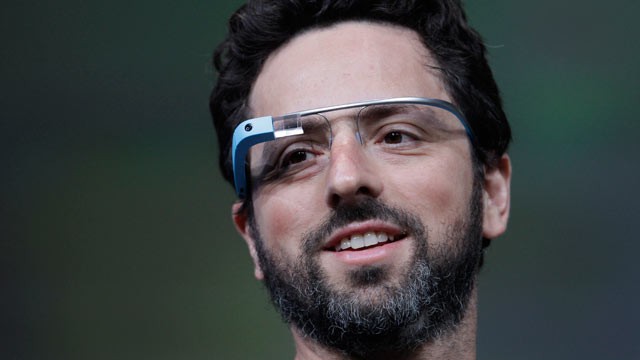
Augmented reality today requires a tablet or smartphone. Tomorrow, it would be via Google Glass. At the same time when the Google Glass shows up, augmented reality is back in the news. This is one of the topics discussed at the Digital Tourism Forum.

The Biplane Company prepares an application that will revive the Allied landings on the French coast. "We can see the Canadiens in the water, in 3D, off the Arromanches," said Lionel Guillaume, Chief of Innovation at Biplane video agency at the end of a workshop on augmented reality organized under the Digital Forum in Deauville (25 and 26 March).

Ad hoc content
Augmented reality allows a mobile or tablet user to relive a period of history on site with a historical characters or a virtual guide, but also to show a monument in its age of glory. It is now possible to discover, as a view of the mind, the Berlin Wall or the Colosseum intact, by superimposing images. The Abbey of Cluny was implemented: the visitor guides the screen to the monument, and can observe resituated vestiges. It is a way to revive the heritage.
Regarding pageants, it is often necessary to use archival documents and to supplement them by research. "Augmented reality will become very present in our daily lives, hammered Stéphane Singier, consultant for studies and Grand Paris digital, cluster Cap Digital, at the Forum in Deauville. We should now think about the cultural and heritage content that could be enhance through this process ".

The budget
This technology inserts graphics images on the real world. "You create an artificial world in which you can move, said Lionel Guillaume. To create this immersion, you must collect data and make 3D modeling. Sometimes research can be complicated." The budget increases accordingly. For the castle of Cherbourg, the budget amounted to about 100 000 €, including archaeological study. Moreover, it’s important to reassure the guides on the site, worried about their role in the future.
Investments are lower, and made easy with the "false augmented reality" without the need of the smartphone's camera, but still with the geolocation of the mobile or tablet. "A camera films at 360 ° says Vincent Burgevin, founder of the new company OnSpot. The designer takes these images and features special effects such as an explosion, from his computer." The consumer has to post where the movie was made, to be immersed in the past or the future. The budget will be from 10 000 € to 30 000 € for a 3 minute film.

Alexis & Garbiel

http://www.bbc.co.uk/news/technology-17618495
http://www.tourisme-numerique.com/actualites.html

Tuesday, 1 February 2011

Prague GPS Digital Guide:


The company « avant-garde Prague » in association with the company digital urban Legends have decided to launch a new project which allows tourists to have access to a Prague GPS Digital Guide.

This guide was born thanks to the willingness of Patrick Beslon “general manager of Avant Garde Prague” in order to make IT available to the tourism field.

Prague GPS digital guide has been developed under windows mobile. It is a new application downloadable on pocket PC, PDA, or smart phones which allows guided visits for tourists in vacation in Prague. By using this application tourists can visit the city by themselves with all the information needed.
It took three years to “Avant Garde Prague” since the beginning of the conception to the launching day.

The goal of this application is to propose a new way of visiting the city. The guide is easy to use and easy to carry on. The main advantage compared to paper guides is that it contains far more information and that there is no limit to its storage. The information it contains can be uploaded and actualized as often as needed. One other advantage is the easiness of use. The information is well organized and the user is not weighted down by the quantity of data.

The software proposes a homepage that represents a map: “different map are available and the user can choose between them”. Once the tourist has found the needed map, he just has to click on a geographical point in order to have access to the specific information he is looking for. Users can have information about touristic areas but also about museums, monuments or practical information as subway stations, posts or cash machines. The guide can be used as search engine by looking for a specific address or name. The very interesting innovation is the immaterial database. In order to make all the information available Digital Urban Legend has created a special map for immaterial information. For example if a tourist clicks on a specific place where someone important was born, he can find specific items related to this person.

An article is always written with a title, geographical coordinates, a main picture and a picture gallery. Articles are linked together.

Prague GPS Digital Guide is also proposing guided tours for tourists. There are many different tours recorded and classified according to their subject. For example a tourist can choose to follow a guided tour of Prague architecture.

This article shows how IT can be useful to the tourism industry. Prague GPS Digital Guide offers a new way of visiting the city. Tourists can evolve by themselves in the city with all the information needed. Furthermore, thanks to the updatable function of the software, tourists become aware of all the specific events occurring during their stay.

http://www.avantgarde-prague.fr/sejours-de-groupe-mice/sejours-d-affaire/incentive-team-building/prague-gps-digital-book/