Showing posts with label Augmented reality. Show all posts

Saturday, 16 April 2016

Augmented reality in Tourism


AR (Augmented reality) is the integration of digital information with the user's environment in real time. Unlike virtual reality, which creates a totally artificial environment, augmented reality uses the existing environment and overlays new information on top of it. AR has become a new buzz word. Actually, this technology, which allows combining seamlessly physical world and virtual information, is widely under-utilized in the field of Tourism.

There are some applications have already use AR technology to create the new experience to tourist. The Mobile Art Lab in Japan had developed a new iPhone App, iButterfly, that lets you catch virtual butterflies and turn them in for valuable offers. Ibutterfly is an augmented reality program, it takes the video feed from your phone's camera and superimposes virtual images - in this case butterflies. Users can travel all around Japan and see a wide variety of 'butterfly species', including some that look like pop celebrities or pieces of food.
Most recently, interactive digital storytelling techniques have been applied to museum settings to increase their educational potential to visitors. For example, the Digital Binocular Station (DBS) makes the static contents of a museum come to life, leading to an interactive, dynamic and interesting adventure, which increases visitor retention time, and return visits. AR technology on museum provides really positive effect on visitors and tourists, which can involve them in the exhibits of museum, instead of looking around the museum. It’s like the visitors earn a free guide to get the information and experience.


Amongst the many AR smartphone applications, AR browsers enjoy the biggest popularity. Many of them claim to have tourism related functionalities. An AR browser suited for the needs of tourism enriches the real-world with interactive virtual information that allows visitors to unfamiliar locations to identify the most important and interesting points of interest and learn more about their surroundings. Probably the most successful and interesting example is the stand-alone smartphone application Yelp, which added AR view to provide an augmented view to tourists.

 AR can represent the history. Except the convenience and interests that AR techonology has bring to visitors, in fact, it also can create and enhance  reproduction of the historical scene.For example,for visiting the most famous Roman Colosseumtourists queue up for long time and spend lots of money, but they can only see the ruins.Now with AR high-tech, visitors can "pass through" to the ancient city of Rome 2,000 years ago.Tourists can see the perfect repairation of Colosseum, the fight between slave and lion ,even the moment that the heroic slave struggling to escape the lion attack. History is not only described in books, but a real scene happening around.

Using the new technologies, media to  develop more wisdom tourism has increasingly become hot in tourism industry.The usageof  Smart AR has changing the way of travel hugely .Of course, There are lots of challenges to overcome, the application of a lack of mass support ,but It’s sure that the value of AR in tourism is limitless .AR open a new tourism world to us.


Source:
http://195.130.87.21:8080/dspace/bitstream/123456789/653/1/Enhancing%20cultural%20tourism%20experiences%20with%20augmented%20reality%20technologies.pdf
http://cdn.intechopen.com/pdfs/38051/InTech-Enhancing_the_tourism_experience_through_mobile_augmented_reality_challenges_and_prospects.pdf
http://eprints.bournemouth.ac.uk/20219/1/eRTR_SI_V10i2_Yovcheva_Buhalis_Gatzidis_63-66


By
Yuanyuan WuJingyao Zhu  


Monday, 1 April 2013

Game Eventification--Tech Trend in 2013

The concept of gamification is a powerful method to attract audiences and increase their involvement. It creates a unique experience by motivating players to compete and excel in particular tasks. Educators apply various games in order to enhance creativity and increase retention. Gamification is also used to engage people to act which is why it has wide application in marketing and advertising.
With the rapid development in digital technologies, gamification is gaining momentum and spreading to various business and leisure activities. Gamification, or otherwise called funware, is now converging with augmented reality software to deliver the ultimate experience for users. These converging industries offer endless opportunities for innovation in the event industry, allowing companies to reach and communicate with target customers more effectively.


Attracting traffic & engaging with attendees
Games can attract people and increase engagement, which is exactly what event planners pursue. Augmented reality gamification allows exhibitors to turn each contact into a personalised, memorable experience with unique outcomes.
“People have fundamental needs and desires for reward, status, achievement, self-expression, competition, and altruism among others. These needs are universal, and cross generations, demographics, cultures and genders.”(Bunchball). In August 2010, one site, DevHub, announced that they have increased the number of users who completed their online tasks from 10% to 80% after adding gamification elements.


Combining education with fun
Companies and associations also organise meetings to educate their members. How to make the time worthy instead of attendees counting minutes during sessions is a big task for event planners. Gamification in meetings, such as rewarding participants for answering questions correctly or providing creative ideas, can help attendees learn faster and deepen their knowledge. Augmented reality apps allow for higher levels of interaction which can be particularly effective during brainstorming sessions.


Enhanced networking opportunities
Games provide participants with the opportunity to compete but not necessarily get to know each other. You may probably want to meet the guy who is on the top position of the leaderboard. It’s hard to achieve in “Candy Crush” but it’s easy when you two are both at the same event. Augmented reality allow for distance and face-to-face interaction, which can be effectively used during events. Some apps allow for personalised design which enhance the networking experience when forming groups, collaborating on tasks etc. In the fall of 2011, SAP’s TechEd user conference invented a game called Knowledge Quest, which successfully attracted 884 teams completed over 55 000 missions. This game encouraged attendees to talk to others and make new contacts.


Event design & demos
Augmented reality can be the perfect tool to customise each event and boost creativity of both exhibitors and attendees. New software products can be used during the conception design stage of exhibitor stands as well as for optimised demo capabilities during the event itself. It allows exhibitors to illustrate conceptual ideas, thus inciting people to interact with their surroundings in a new way. Moreover, augmented reality experiences during events provide an opportunity for instant, genuine feedback.


Co-creation opportunities
In the past, marketers have successfully applied gamification to the co-creation philosophy of products and services. Today, augmented reality offers much more sophisticated tools for engaging with customers. Enlightened companies do not want to control their customers but to influence them and inspire them to act.


Retention & continuous engagement
If applied properly, augmented reality gamification is a recipe for success with long-term effects. Customers can be delighted by the experience and increase their engagement with the company beyond the event. They can become loyal customers or passionate advocates of the brand.
But more importantly, augmented reality and gamification empower individuals to pursue new heights in innovation, science and development.
This is a new vision of the world which allows people to experience things in a more advanced way which marks the beginning of a new era in education, health, art, media, entertainment, retail, manufacturing, brand engagement, transportation, travel and urban design.


For more information, visit Augmented World Expo 2013 - the largest exposition demonstrating how these technologies come together to change our lives and change the world.#
Knowledge Quest game for SAP TechEd 2011 - Las Vegas


SOURCES:
http://augmentedworldexpo.com/are-is-now-awe-augmented-world-expo/
 
Written by Lilyana & Shirley

Thursday, 28 March 2013

Digital Tourism: Challenges of augmented reality


Invisible, attentive and adaptive technologies that provide tourists with relevant services and information anytime and anywhere may no longer be a vision from the future. The new display paradigm, stemming from the synergy of new mobile devices, context-awareness and AR, has the potential to enhance tourists’ experiences and make them exceptional.

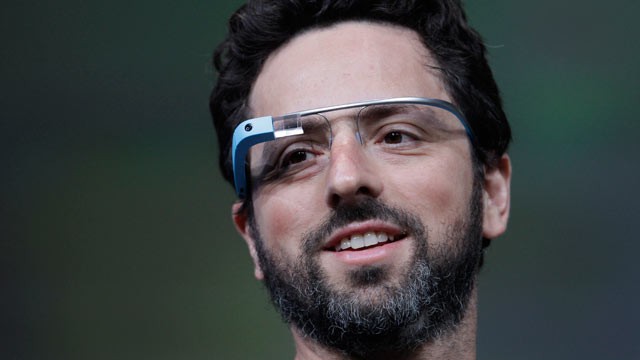
Augmented reality today requires a tablet or smartphone. Tomorrow, it would be via Google Glass. At the same time when the Google Glass shows up, augmented reality is back in the news. This is one of the topics discussed at the Digital Tourism Forum.

The Biplane Company prepares an application that will revive the Allied landings on the French coast. "We can see the Canadiens in the water, in 3D, off the Arromanches," said Lionel Guillaume, Chief of Innovation at Biplane video agency at the end of a workshop on augmented reality organized under the Digital Forum in Deauville (25 and 26 March).

Ad hoc content
Augmented reality allows a mobile or tablet user to relive a period of history on site with a historical characters or a virtual guide, but also to show a monument in its age of glory. It is now possible to discover, as a view of the mind, the Berlin Wall or the Colosseum intact, by superimposing images. The Abbey of Cluny was implemented: the visitor guides the screen to the monument, and can observe resituated vestiges. It is a way to revive the heritage.
Regarding pageants, it is often necessary to use archival documents and to supplement them by research. "Augmented reality will become very present in our daily lives, hammered Stéphane Singier, consultant for studies and Grand Paris digital, cluster Cap Digital, at the Forum in Deauville. We should now think about the cultural and heritage content that could be enhance through this process ".

The budget
This technology inserts graphics images on the real world. "You create an artificial world in which you can move, said Lionel Guillaume. To create this immersion, you must collect data and make 3D modeling. Sometimes research can be complicated." The budget increases accordingly. For the castle of Cherbourg, the budget amounted to about 100 000 €, including archaeological study. Moreover, it’s important to reassure the guides on the site, worried about their role in the future.
Investments are lower, and made easy with the "false augmented reality" without the need of the smartphone's camera, but still with the geolocation of the mobile or tablet. "A camera films at 360 ° says Vincent Burgevin, founder of the new company OnSpot. The designer takes these images and features special effects such as an explosion, from his computer." The consumer has to post where the movie was made, to be immersed in the past or the future. The budget will be from 10 000 € to 30 000 € for a 3 minute film.

Alexis & Garbiel

http://www.bbc.co.uk/news/technology-17618495
http://www.tourisme-numerique.com/actualites.html

Monday, 21 February 2011

Art & augmented reality: the case of Picasso


Technology is changing fast … and art! The Virginia Museum of Fine Arts (VMFA) in Richmond offers a piece of evidence, as the Artinfo website reveals in its last article: http://www.artinfo.com/news/story/37006/virginia-museum-launches-augmented-reality-picasso-shows-in-new-york-philadelphia-dc-starbucks/.

The museum has launched “Augmented Reality” Picasso Shows in New York, Philadelphia, D.C and Starbucks allowing curious to enjoy virtual versions of the exhibition “Picasso: Masterpieces from Musée National Picasso, Paris”.

Augmented Reality is an advanced technology which gives the opportunity to see real-world environment through a computer, mobile, etc. Today, we are hearing a lot about this recent technology used in various fields, notably in the tourism industry.

In the case of the museum, Philadelphia’s inhabitants have the possibility to scan a barcode through their mobile which recreates the VMFA in a virtual version. Then, they can browse into the museum and look up to the art collections. For the art lovers, this represents a great opportunity to visit the museum when traveling is not possible or have a global overview before coming.

People have access to this virtual tour thanks to the application Layar via their smarphones. This app enables walkers to see a work from the Musée National Picasso collection, as soon as their phone detects one of the 22 separate coordinates of the Layar versions of Picasso works in New York, D.C and Richmond. This could catch people attention and arouse their curiosity regarding the collection. It is a great way to promote an exhibition, special events or even a destination. This supposes an interest of the visitor, who firstly downloaded the app and asked for the alert. It’s an active application.

In Richmond, the city where the VMFA is located, you can even go to a Starbucks and enjoy augmented reality thanks again to the barcode at your disposal. But a question appears: why would I go to the museum, pay the entrance $20 whereas I could visit it with my mobile for free or at least more cheaply for the price of a coffee?

Finally, the experience is different. Augmented reality is used to enable people to be aware and curious of the exhibition and we should note that the setting is not the same.

This example of new technology offers a greater experience to the visitors. They can better prepare their visit, choose the piece of art they want to see, but also enjoy added-value during the experience itself. Thanks to applications providing comments about the history and the context of the painting, visitors can get more information. X-rays techniques allowed CNRS scientists to study Vinci’s sfumato techniques, which enables to understand the way the artist processed to achieve his masterpiece. This is another example of added value that be brought to visitors thanks to applications.

At the end, they have the opportunity to come back to the museum through their mobile and keep virtual souvenirs of the work they love. Indeed, since pictures are often forbidden in museums, augmented reality gives also the opportunity to remember.

However important questions remain for culture and museums fans: won’t new technologies offering augmented reality become a substitute of the museums and artworks? Why bother staying in line and pay the entrance fee if I can visit the museum through Iphones? Will the visitors still pay attention to what’s around them if they constantly have to look at their phones to get informed?

If you like Picasso, take your Smartphone and go to Starbucks for a coffee/art time!


For more information:

The Virginia Museum of Fine Arts: http://www.vmfa.museum/


VMFA’s press release: http://www.vmfa.museum/Press_Room/VMFA_News/Social_media_campaign_brings_Picasso%E2%80%99s_art_to_life.aspx

The agency allowing VMFA Augmented Reality: http://www.martinagency.com/


Photo retrieved from: http://www.artinfo.com/news/story/37006/virginia-museum-launches-augmented-reality-picasso-shows-in-new-york-philadelphia-dc-starbucks/