Showing posts with label "Virtual Reality". Show all posts

Saturday, 14 April 2018

Artificial intelligence, virtual reality: also for tourism

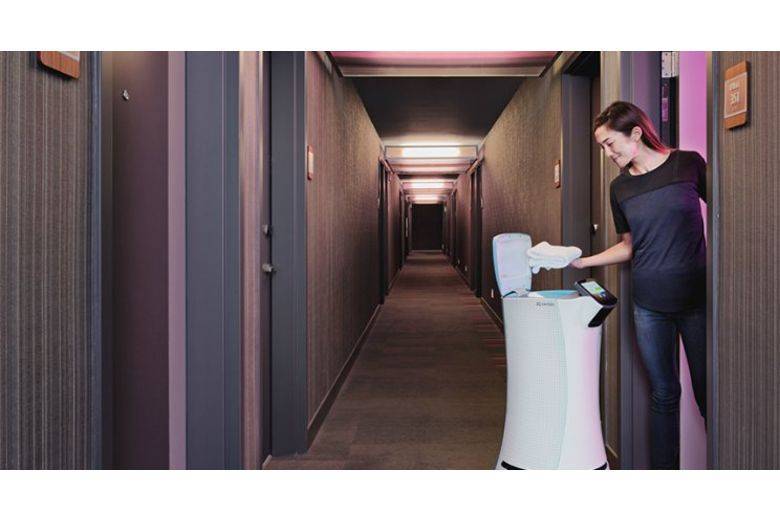
The Artificial Intelligence is a term applied when a machine has the capability to imitate intelligent human behavior. This totally new kind of technology is more and more developed and used in different areas and especially now in tourism. Artificial Intelligence is going to revolutionize the hospitality industry and the experience of the customers will totally change. For instance in future hotel the receptionist could be replaced by a mirror of facial recognition. Once the customers will be identified, the room will be adapted according to the guests’ wishes, such as the temperature, ambiance, lighting and so on. Thanks to the use of the personal database, the IA will totally personalize the service according to the preferences of the guest. This new technology is particularly used by luxurious hotels which answer to the high and exigent guests’ requirements. This new gadget is not only in favor of the guest but also hoteliers: they will strengthen their knowledge on their guests. The hotelier will know the needs of the clients before that they express their desires. The hotel will collect the guest information during the booking via internet but also thanks to the technology called “beacon”. Thanks to beacon, Artificial Intelligence will observe the habits of the customers then the hotel will keep the guests loyal by offering a personalized service or by selling them added products. For instance if the hotel knows that the guest is coming with his family, it will propose him a discount on the kid menu. This new type will strongly increase the hotel industry’s profitability. There is also another technology called Virtual Reality which enable users to perceive the hotel as a place instead of set of images. This gadget allow a hotel to reach a larger customer base as the guests can visualize themselves in their rooms, to visit the restaurant or swimming pool. To conclude the article suggests this new technology will increase the satisfaction of customers as well as the increase of the hotel revenue.
Image result for virtual reality tourismImage result for artificial intelligence hotels
image retrieved from: https://goo.gl/images/bFaj47 and https://goo.gl/images/8xpyWW
However, IA gives rise to a number of questions. According to a study published by Mckinsey & Company 66% of tasks performed in hospitality industry could be achieved by IA. It represents 53,9 million jobs across the globe, creating million of unemployed people if they are replaced by humanoids and robots. Are people ready to leave their jobs to machines ? The revolution of IA will for sure disrupt the tourism industry and encounters some pessimistics despite a huge potential: again according to Mckinsey & Company thanks to the increase in productivity and in wages, people’s demand for tourism will increase  and generate extra revenues and jobs in return. The next issue raised by IA will be around data protection. More and more data will be collected and used opening the way to even more cases like the Facebook Cambridge Analytica.

Would you trust IA to take care of you during your vacations? Would you be afraid to reveal even more personal data in order to receive a completely personalised experience ?

Monday, 12 March 2018

A new way to visit museums


A New Way To Visit Museums: Virtual Reality, the new tool in the tourism industry

Source: https://www.goethe.de/en/kul/bku/20949031.html - Photo: Städel Museum

Since several years, Virtual Reality is more and more present in different industries. It is a big innovation of the 21st century, used in a lot of sectors: for example video games, medical industry, flight simulator for airline… Tourism industry isn’t an exception, VR begin to play an important role for this sector too. Indeed, you can now visit sites or destinations without being there in reality! It constitutes a big change for the destinations and for the travelers.

But now, you can also visit a museum and see arts through VR…


Nowadays, museums need to differentiate themselves from others in order to attract more customers. Indeed, technology and especially virtual reality is one of the tools used by museums. This new experience is a new way to engage young as well as older visitors.


Many museums have moved forward into this virtual reality tool. In 2015, the British Museum was one of the first to try this experience thought a weekend event dedicated to Bronze Age object or virtual tour of its Egyptian Gallery . The National Museum of Natural in Paris have launched its new permanent virtual reality installation where people can zoom in on creatures or standing right in front of an elephant with the aim to understand its magnitude. According to Bruno David, president of the museum, with the traditional means it was impossible to demonstrate the same experience. Other museums go even farther, with the example of Kremer Museum which exists only as a virtual space.

 Source: https://blog.britishmuseum.org/explore-ancient-egypt-in-our-virtual-reality-tour/ 
   
Even if VR has many advantages for the museums as well as for visitors, it also raises some concerns about sustainability and funding.  Indeed, the creation of VR programs is expensive notably for public institutions. However, in response to an increase in the number of request in VR installations, the company HTC introduced an initiative called VIVE Arts which funds and develops VR content for museums and cultural institutions.  

As we can see, VR is a big innovation and can allow people to better discover museum and arts, for instance it can attract more young visitor who are not necessarily attacked by museums. However, we think that VR cannot replace reality and physical visits: people can find everything on the Internet and see it through virtual reality is the same as in a screen of a computer. It’s not the same thing that seeing for example a tableau in reality.
Moreover, we have to draw limits to VR in museum, with the example of Kremer Museum. This museum is only a virtual space, so can we really consider it as a museum?

What about you? Would you try a museum with VR experience?


Source: Cigainero, J. (2018, March 12). European Museums Get Adventurous With Virtual Reality. Retrieved from The New York Times:
https://www.nytimes.com/2018/03/12/arts/european-museums-get-adventurous-with-virtual-reality.html